Western Black Widow Bite: Symptoms, Danger & Treatment (2026)
A western black widow bite often starts as little more than a sharp pinprick, then turns into something much bigger: spreading muscle cramps, abdominal rigidity, and sweating that can mimic a medical emergency. The bite mark itself is frequently unremarkable, which is exactly why people underestimate it or panic once systemic symptoms kick in.
What a western black widow bite looks like
Many people feel a sharp, immediate pinprick at the moment of the bite, though a smaller number notice little or nothing right away. Within minutes, that initial sting often fades into a dull, spreading numbness, and it's this developing sensation — not the mark itself — that usually tips people off.
At the site, you may see one or two tiny red fang marks, sometimes surrounded by mild redness or a faint pale ring known as a halo lesion. Occasionally a small blister forms. Compared to the drama that follows systemically, the local mark is often disappointingly plain — no large welt, no obvious pattern, nothing that screams "spider bite" on sight.
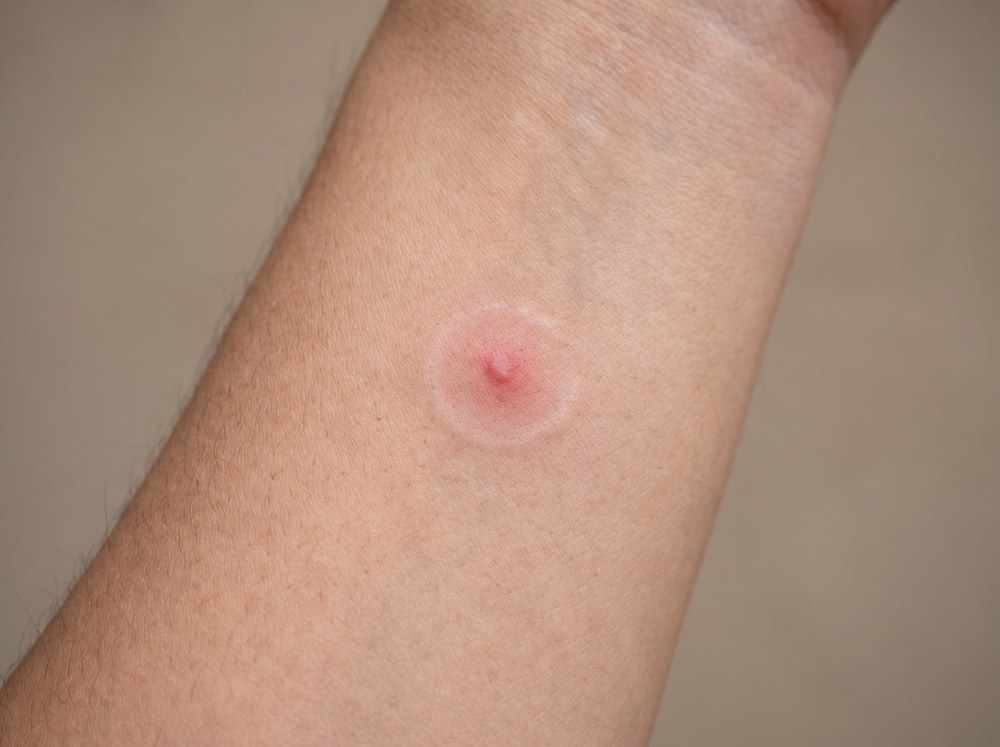
There is no reliable "signature" mark the way there is for some other bites — no bull's-eye, no violin shape, no growing ulcer. Because the visible mark is so unremarkable, black widow bites are frequently misidentified at first glance as a mosquito bite, a splinter, or nothing at all, until the muscle pain starts.
Bite Symptom Checker
Check every symptom you're currently experiencing. Get a plain-English risk read.
Still unsure what caused these symptoms? Running the marks past a household insect identifier can help rule out other biting insects in the area.
Is a western black widow bite dangerous?
Most bites resolve within a matter of days with supportive care such as pain control, cold compresses, and rest. The local wound itself is rarely the problem — unlike some other spider bites, black widow venom does not typically cause tissue death or ulceration at the site.
The real concern is systemic: black widow venom is a neurotoxin that can trigger latrodectism, a bodywide reaction involving muscle cramping, abdominal rigidity, sweating, nausea, and in more severe cases, breathing difficulty or dangerous changes in blood pressure. Severe outcomes are uncommon, and antivenom exists for the cases that need it, but it's reserved for more intense presentations because antivenom itself carries an allergy risk. If you want to compare markings and behavior against other regional spiders, this illustrated species profile of the western black widow is a useful reference before you decide how urgent your situation is.
Children, older adults, pregnant people, and those with existing heart, lung, or immune conditions are more likely to have a rougher course and should seek medical guidance sooner rather than later.
Bottom line: monitor closely for the first 8 to 24 hours. If cramping spreads toward your chest or abdomen, or breathing becomes difficult, escalate to medical care immediately rather than waiting it out.
Wondering how serious yours is right now?
Run the Symptom CheckerSymptom timeline after a bite
Hours 0–2. A sharp pinprick pain, sometimes barely noticed, gives way to dull numbness. Early systemic signs — mild cramping, sweating — can begin appearing within 30 to 60 minutes.
Hours 2–8. This is typically when symptoms peak for a bad bite: muscle cramps and rigidity spreading toward the abdomen, back, or chest, along with nausea, sweating, and sometimes a rapid heartbeat or elevated blood pressure.
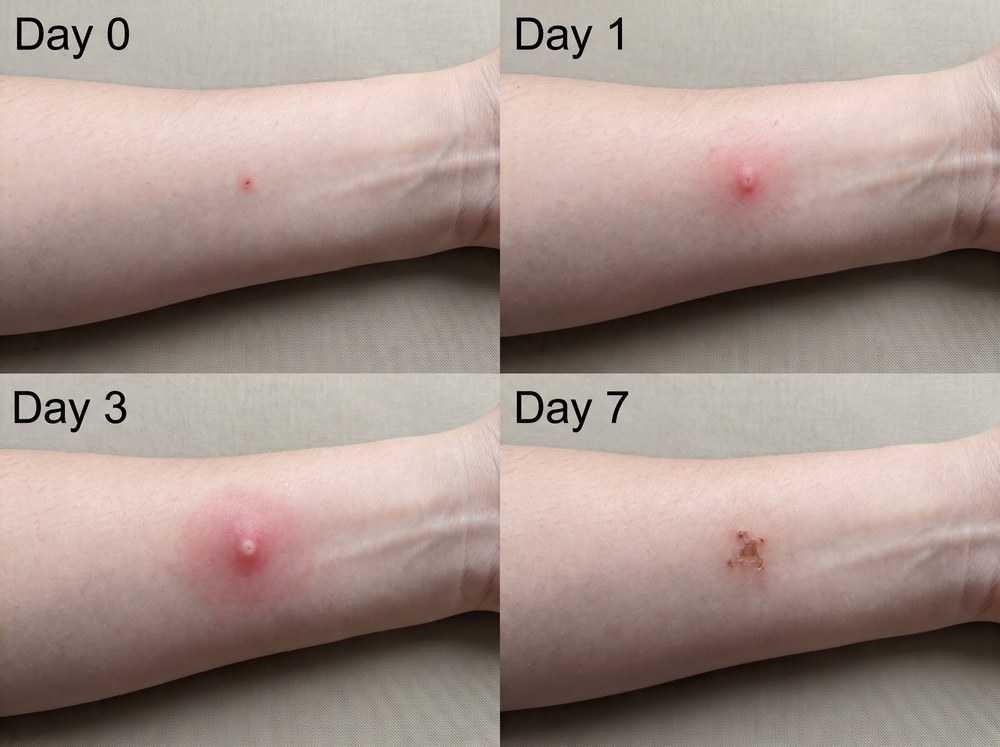
Day 1–2. Severe symptoms usually begin easing within this window, especially with supportive treatment. The local bite site stays relatively unremarkable throughout — mild redness or swelling at most, without the ulceration seen in some other spider bites.
Day 3–7. Most people are substantially improved by day three, though some residual soreness or mild cramping can linger for a week or more in a smaller number of cases. If pain, cramping, or systemic symptoms are still intensifying rather than easing by this point, that's a signal to seek medical care rather than continue waiting.
Which Bug Bit Me?
Not sure it was a western black widow? Answer three questions and we'll narrow the list.
Treatment: what to actually do
Wash and elevate. Clean the bite with mild soap and water, then elevate the affected arm or leg above heart level if you can — this helps limit local swelling while you decide on next steps.
Cool, don't warm. Apply a cold, damp cloth or an ice pack wrapped in fabric to the area. Cold compresses help control pain and swelling; heat is not recommended for this bite and can make discomfort worse.
OTC support. Over-the-counter acetaminophen can help with pain, and an antihistamine may ease itching or a rash. These help with comfort but won't stop systemic symptoms if venom effects are progressing.
Watch, don't wrap. Note the time of the bite and keep an eye on how you feel over the next several hours rather than tightly bandaging the area. If cramping spreads to your abdomen or chest, or you develop difficulty breathing, treat that as your signal to seek care immediately.
Preventing another bite
Western black widows favor dark, undisturbed spaces — woodpiles, garages, sheds, and gaps under decks are classic hiding spots. Shake out gloves, boots, and stored items before use, and wear gloves when moving firewood, mulch, or debris.
Checking corners and crevices with a flashlight before reaching into them is a simple habit that avoids most accidental contact. Before you rule out other spiders you might be seeing around the property, the BugKnow app to identify a western black widow instantly from a photo can help you confirm what you're actually dealing with.
If you've spotted more than one black widow around your home, a full inspection is warranted.
Wondering whether to head to urgent care?
Walk Through the Decision TreeShould You See a Doctor?
A short decision tree based on CDC and Mayo Clinic guidance.
1 / 3 Are you having difficulty breathing, chest tightness, or an irregular heartbeat?
2 / 3 Is there severe or spreading muscle rigidity or cramping in your abdomen, back, or chest?
3 / 3 Has the pain, swelling, or cramping been steadily getting worse for more than a few hours despite home care?
Take 30 seconds to check your bite now.
Check My SymptomsFrequently asked questions
Can a western black widow bite kill you?
Western black widow bites can be venomous and cause significant pain, muscle cramping, and other systemic symptoms, but fatalities are rare when medical care is available. Most healthy adults recover fully with supportive treatment such as pain control and, in severe cases, antivenom. Children, older adults, and people with heart or breathing conditions face higher risk and should seek care quickly. Treat any suspected bite seriously, but understand that death from a black widow bite is an uncommon outcome in the modern era of emergency medicine.
How do I tell a black widow bite from a brown recluse bite?
A black widow bite usually causes sharp, immediate pinprick pain followed by spreading muscle cramps, abdominal rigidity, sweating, and nausea, with little change at the bite site itself. A brown recluse bite tends to start milder, then develops into a red, blistering wound that can darken and ulcerate over several days as tissue breaks down. In short, black widow bites hurt fast and affect the whole body, while brown recluse bites look worse locally over time.
What does black widow venom actually do to your body?
Black widow venom contains a neurotoxin that acts on nerve endings, triggering the release of chemical signals that overstimulate muscles. According to CDC guidance for outdoor workers, the venom spreads through the body from the bite site into the chest, abdomen, or beyond, producing widespread pain, cramping, and rigidity. This bodywide reaction, called latrodectism, is why symptoms can feel far worse than the bite mark itself looks.
How long until I know if a western black widow bite is serious?
Warning signs of a serious reaction usually appear within 30 minutes to a few hours after the bite, most often as spreading muscle cramps, abdominal rigidity, sweating, or nausea. If symptoms are still mild after this window, the bite is more likely to stay localized. Severe symptoms typically peak within the first day and begin easing over the next two to three days, though some soreness can linger for weeks in a smaller number of cases.
What does a western black widow spider look like?
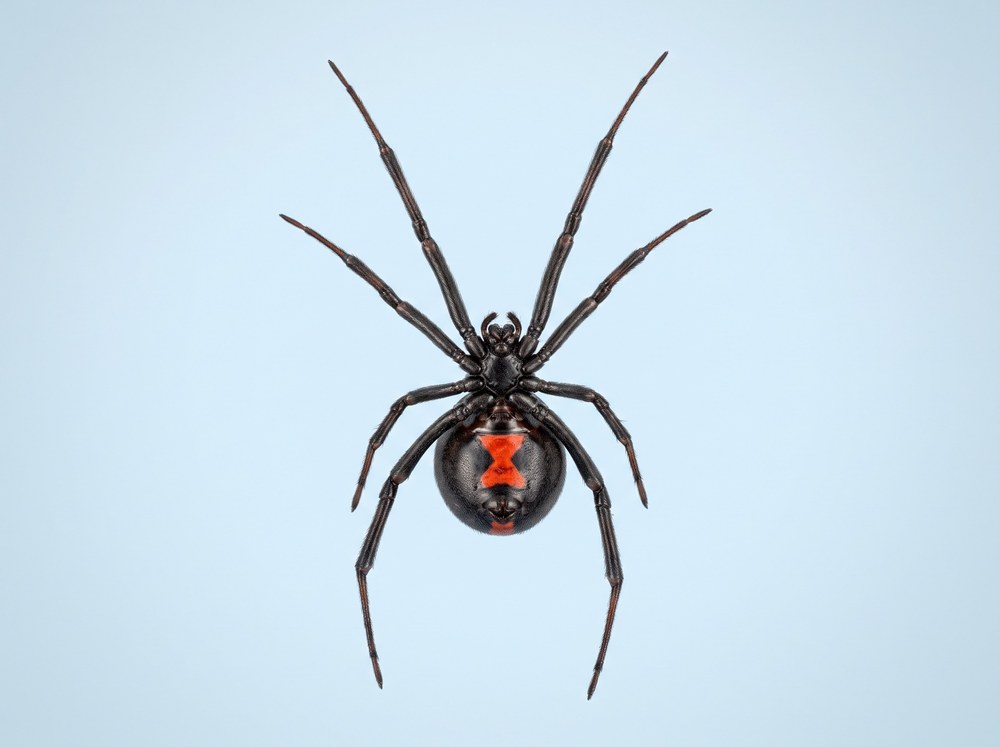
The western black widow is a shiny, jet-black spider with a rounded, bulbous abdomen and a red or orange hourglass-shaped marking on its underside. Females measure roughly half an inch in body length, not counting their long, thin legs. Males are much smaller, paler, and rarely bite. You are most likely to find females in messy, tangled webs tucked into woodpiles, sheds, garages, or other undisturbed outdoor spaces.
Is a black widow bite painful right away, or does it take time to notice?
Most people feel a sharp, pinprick-like pain the moment a western black widow bites, though a smaller number notice little or nothing at first. Dull numbness often follows within minutes, and more noticeable symptoms, such as muscle cramping, usually build over the next 30 to 60 minutes. Because the bite mark itself can be tiny or barely visible, the developing pain pattern is often a stronger clue than the mark alone.
Do all black widow bites need antivenom?
No. Most black widow bites are treated with supportive care, including pain medication, muscle relaxants, and monitoring, without antivenom. Antivenom is reserved for severe cases involving intense pain, significant muscle rigidity, or dangerous changes in heart rate or blood pressure, partly because antivenom itself carries a risk of allergic reaction. A doctor decides whether antivenom is appropriate based on how severe and how systemic the symptoms become.
Where are western black widows most commonly found?
Western black widows are common throughout the western United States, favoring warm, dry climates and undisturbed, cluttered spaces such as garages, sheds, woodpiles, crawl spaces, and areas around swimming pools. They build messy, irregular webs low to the ground and prefer to stay hidden during the day. Bites are more frequent in warmer months when both spider activity and outdoor human activity increase.
Still monitoring a bite from earlier today?
Recheck Your Symptoms